Photoshop Incorporates AI Neural Filters to Adjust Age and Expression in Seconds | Gadget theory
While Photoshop has been around since 1990, photo editing software has changed dramatically over the past 30 years. Photoshopping has gradually improved over time, going from a laughable and obvious cut to amazing results that you swore were real.
Now the software is taking the next step and stepping into the AI arena. With its latest update (to version 22.0), there is a list of AI-based features including AI edge selection, sky replacement tool, and image editing tools. called “neural filters”.
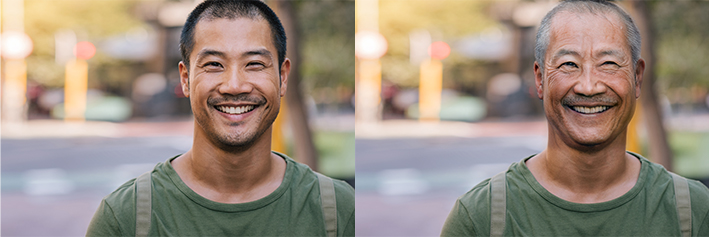
Easily adjust age and facial expressions
These new filters are really impressive, because not only do they have overlays and effects available, but there are also tools that will let you edit portraits in a whole new way. Using these tools will allow users to modify the age and facial expression of the subject of the image with basic sliders. You can reduce or amplify facial expressions of “joy”, “surprise” or “anger”.
Of course, there are a lot of features that were achievable before, such as removing a person’s glasses and blemishes, but they are also improved. A filter will allow you to transfer makeup from one person to another. The best of all? All this will be possible with a few simple clicks. Of course, if you regret any changes, just click multiple times to change or completely undo all changes.
Maria Yap, vice president of digital imaging at Adobe, said The edge: “This is where I think we can now say Photoshop is the most advanced AI application in the world. We create things in images that did not exist before.
To accomplish these features, Adobe has incorporated GANs, or generative antagonist networks, a machine learning technique that has proven to be very effective with the generation of visual images.
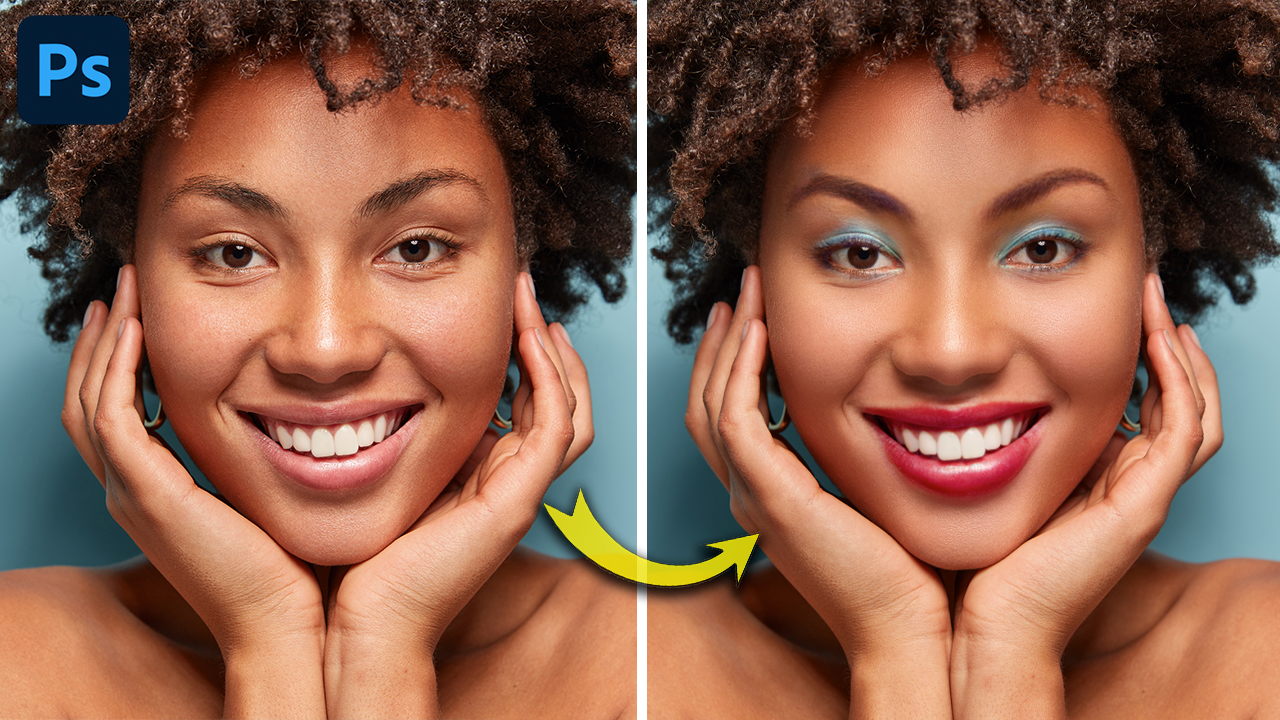
Transfer makeup from one person to another
Of course, we haven’t yet seen how creative photo editors will get on with the technology, but there seems to be an endless array of possibilities available. These updates offer quality and quick changes, but of course, they’re not flawless. They still won’t completely replace professional retouchers, but they absolutely help with some mundane editing tasks.
The operation of AI programs relies on learning from many examples. In order to create the neural networks, Adobe fed data consisting of thousands of before and after shots provided by professional photographers.
The GANs will then function as a duo of students and teachers, one copying the examples and the other keeping track of changes between the output data and the training data. Alexandru Costin, Adobe’s vice president of engineering for Creative Cloud, explains, “Basically we train the GAN to do the same corrections a professional retoucher would do.
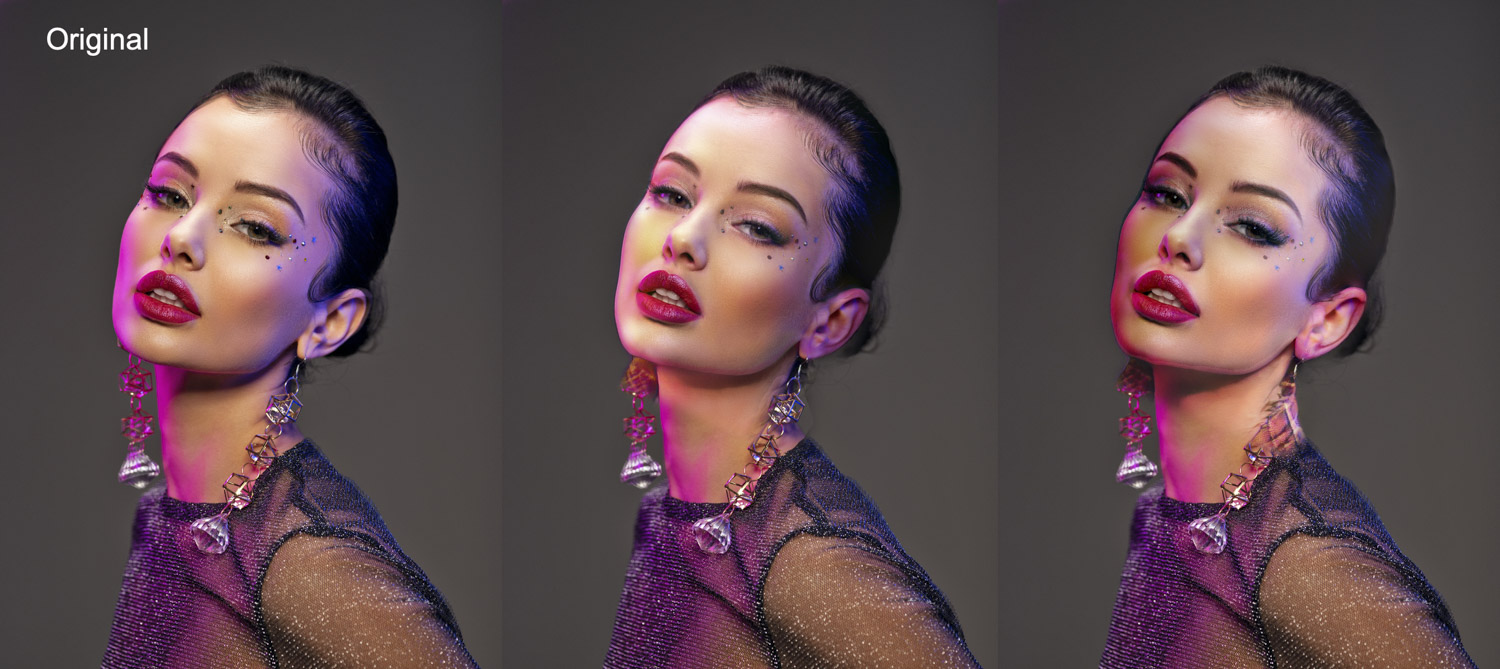
Change the light source with neural filters
He continued, “One of our biggest challenges is preserving skin tone. It is a very sensitive area. To combat any AI biases, Adobe has engaged review teams and an AI ethics committee to test for human biases whenever the algorithm is updated. Costin added, “We do a very thorough review of every ML [machine learning] functionality, look at those criteria and try to raise the bar. “
Comments
Post a Comment